Review: My Uncle is Cooler Than My Mom Funny Design
As a designer who spends more time staring at stitch simulations than actual people, I approach every new embroidery file with a healthy dose of skepticism. We have all seen those trendy sayings that look great on a screen but turn into a tangled mess of thread once they hit the hoop. Today, I am taking a close look at the My Uncle is Cooler Than My Mom Funny design to see if it holds up under the needle for real-world projects. This isn't just about whether the text is readable; it is about whether this graphic can carry the weight of a custom order for a small shop product or a personalized gift.
First Impressions and Visual Personality
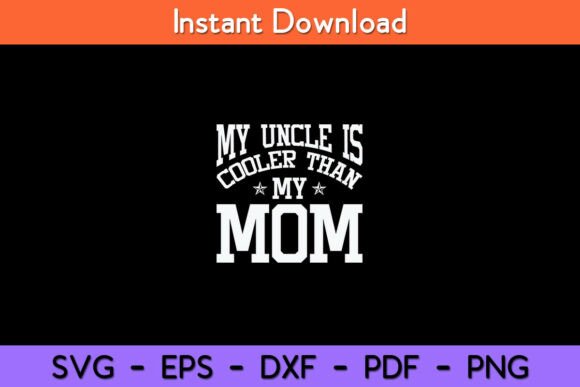
When I first loaded the My Uncle is Cooler Than My Mom Funny layout into my digitizing software, the immediate takeaway was its playful, casual vibe. The typography feels modern yet approachable, which is essential for family-themed humor. It avoids looking too stiff or corporate, fitting perfectly into the Crafts and Graphics categories where personality drives sales. The arrangement of the words suggests a design that relies heavily on clean lines and consistent spacing. For an embroidery project, this is crucial. If the kerning is too tight, the stitches will bridge poorly; if it is too loose, the phrase loses its impact. Visually, it screams "boutique baby shower" or "funny family reunion," making it a strong candidate for seasonal spikes in demand.
Real-World Application: The Sweatshirt Test
To truly evaluate this design, I imagined a specific scenario: a customer ordering a custom sweatshirt embroidery piece for a nephew's birthday. The client wants something durable that survives playground roughhousing but still looks professional enough for photos. Placing My Uncle is Cooler Than My Mom Funny on a mid-weight cotton blend fleece is likely the sweet spot. The texture of the fleece provides enough loft to make the stitching pop without swallowing the details.
In this context, the design acts as the centerpiece. Unlike complex applique design work that requires multiple fabric swaps and extensive trimming, this appears to be a text-heavy graphic that relies on solid fills or perhaps a mix of satin stitch borders and fill stitch bodies. For a craft business owner, this efficiency is gold. It means faster turnaround times and less risk of user error during production. Whether you are creating a tote bag design for a market stall or a baby embroidery item for an Etsy listing, the simplicity of the message allows the craftsmanship of the stitching to shine through.
Navigating Fabric Challenges and Hoop Constraints
However, no design is universal, and practical judgment requires knowing where My Uncle is Cooler Than My Mom Funny might struggle. One major consideration is the hoop size. Depending on the specific version of the file you download, the width of the phrase could be demanding. If you are working with a standard 4x4 hoop, you might find yourself cramped, forcing you to scale the design down to a point where the stitch density becomes problematic. Tiny lettering on stretchy fabrics like jersey knits is a recipe for distortion.
If you attempt this on a cap or a curved surface, the linear nature of the text could warp unless you have excellent hooping technique and the right stabilizer. For textured fabrics like waffle weave or heavy towels, the running stitch details (if present in the outline) might get lost. In these cases, I would advise testing the design on scrap fabric first. Always check how the thread colors contrast against the fabric texture. A dark thread on a dark garment might look sophisticated in a mockup but invisible in reality. Conversely, high-contrast choices enhance readability but highlight any imperfections in the stitch count or alignment.
Commercial Viability and Brand Consistency
For the Etsy seller or creative entrepreneur, the value of a design extends beyond the stitch count; it is about brand consistency and customer trust. Using a well-balanced file like My Uncle is Cooler Than My Mom Funny signals professionalism. When a buyer receives a finished product where the letters are crisp and the spacing is even, they associate that quality with your entire shop. This design has the potential to be a staple in a catalog of holiday embroidery gifts or year-round custom apparel.
It is important to remember that while the source material is described as an SVG for cutting machines, using it for commercial embroidery often requires a dedicated machine embroidery design file (like PES, DST, or XXX). Do not assume an SVG converts perfectly to stitches without manual digitizing adjustments. If you are selling digital assets, ensure your licensing terms are clear. If you are selling physical goods, verify that the license allows for commercial use of the stitched output. Misunderstanding these terms can lead to serious issues for a small shop product line.
Practical Notes for the Working Designer
Before committing this design to a paid order, consider these technical checkpoints:
- Test on Scrap: Never skip the test run. Stitch the design on the same type of fabric you intend to use for the final handmade product.
- Check Density: Look closely at the fill areas. If the stitch density is too high, it can cause puckering, especially on lighter materials.
- Stabilizer Selection: Match your stabilizer to the fabric weight. A cut-away is usually safer for garments that will be washed frequently, ensuring the embroidered patch effect remains stable over time.
- Color Contrast: Review the design in black and white mockups to ensure the shape holds up without relying on color differentiation.
- Licensing Verification: Confirm the specific terms for the digital embroidery file. Can you sell the stitched item? Can you sell the file itself? Clarity here protects your craft business.
- Detail Inspection: Zoom in on the corners of the letters. Sharp corners in a graphic often need tie-ins or specific stitching angles to prevent fraying after washing.
Ultimately, My Uncle is Cooler Than My Mom Funny offers a charming, relatable aesthetic that fits well within the current market for personalized family gifts. Its success, however, depends entirely on the execution. By respecting the limitations of your machine, choosing the right materials, and understanding the nuances of converting a graphic into a finished product, you can turn this simple saying into a best-selling item. Whether it ends up on a pillow cover, a kitchen towel, or a favorite hoodie, the goal is always the same: a clean, durable stitch that makes the recipient smile. Treat the file with the care it deserves, and it will serve as a reliable asset in your creative toolkit.